


3 mins

A newly published Microsoft GPU patent application describes a system that would let gaming PCs, laptops and phones train AI models while they sit idle, with owners earning credits for the work. The filing, titled "Opportunistic Micro-training on Edge Devices Using Spare GPU Utilization" (US-20260349820-A1), was first covered by Insider Gaming, then by VideoCardz and TechPowerUp, and it spread quickly on X, including in this tbreak post. Before you picture your graphics card paying for itself, here's what the document actually says and what it doesn't.
What does the Microsoft GPU patent describe?
According to the reports, Microsoft Technology Licensing filed the application in April 2025, and it was made public on November 5, 2026. It describes taking large AI training jobs, normally run in data centers, and splitting them into small "micro-tasks" sized to what each device can handle. Those tasks would then be sent to phones, laptops and gaming PCs whenever they have spare compute capacity.
Insider Gaming notes that Microsoft would act as a middleman: the filing presents the system as a way for third parties that lack computing resources to train their models, not only as a tool for Microsoft's own AI work.
How would it avoid slowing down your games?
The patent says the system watches GPU and CPU load, memory use, temperature and power draw. As quoted by Insider Gaming, it checks less often when the GPU is busy or hot and more often when it is idle or cool. TechPowerUp and VideoCardz report that tasks can be reduced, paused or stopped when limits are crossed, and that results are cross-checked across devices to catch faulty or tampered work. The stated goal is to avoid slowing down apps, draining batteries or overheating devices.
Would PC owners actually get paid?
Possibly, but nothing is promised. The filing says the system "may track the amount of computations" a device performs, which could "result in a credit being applied" to the owner's account. Those credits could be exchanged for free software, access to AI models or money. Participation would be opt-in: owners would have to explicitly authorize it.
What's missing matters more. The filing gives no payout rate and no list of supported hardware. Microsoft hasn't announced a Windows or Xbox service, and in the coverage we reviewed, the company had not commented publicly on the application.
Is it worth the extra power and wear?
That's the open question every outlet raised. Running AI work on an "idle" PC still uses electricity. VideoCardz gives a simple example: an extra 250 W for four hours a day adds about 30 kWh to a monthly bill. Whether credits would cover that depends on your local electricity rate and on payouts nobody knows yet.
There's also hardware wear to think about. Sustained compute loads keep the GPU, its fans and the power supply working harder than a PC that's simply sleeping. The patent's thermal and power monitoring is meant to limit that, but no real-world data exists, because there's no product to test. Many readers compared the idea to GPU crypto mining or distributed projects like SETI@home and Folding@home.
Is this a real Microsoft service yet?
No. A published patent application only means the document is now public. It doesn't mean a patent has been granted or that Microsoft plans to ship anything. As TechPowerUp points out, plenty of applications never become products. Treat this as an idea Microsoft wanted to protect, not an upcoming feature.
Should you buy a GPU now or wait for this?
Don't base a purchase on it. With no payout rate, no hardware list and no launch date, there's no way to count future credits toward the cost of a graphics card today. Choose a GPU for the games and apps you actually use:
- If your current card handles your games well, there's no reason to upgrade because of this patent.
- If you need more performance now, compare cards on gaming performance, VRAM and power draw, not on hypothetical AI earnings.
- If efficiency matters to you, an efficient card and a quality power supply will help whether or not a program like this ever launches.
You can browse our graphics cards, see our ready-to-play gaming computers, or check our refurbished PCs for solid performance on a tighter budget.
FAQ
What is Microsoft's idle GPU patent called?
It's titled "Opportunistic Micro-training on Edge Devices Using Spare GPU Utilization," application number US-20260349820-A1, published November 5, 2026.
Would Microsoft use my GPU without permission?
According to the filing as reported, no. Owners would have to opt in explicitly before any training tasks run.
How much could I earn?
Unknown. The application lists possible rewards (software, AI model access or money) but gives no rate.
When will it launch?
There's no announced launch. Microsoft hasn't revealed any Windows or Xbox service based on this patent.
Sources
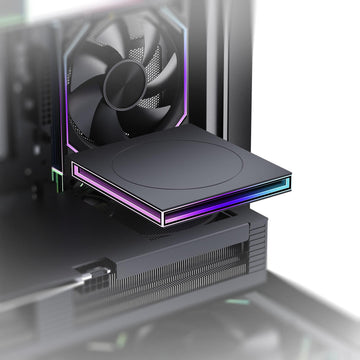
Image: NVIDIA GeForce RTX 5090 press image, used to illustrate a gaming GPU.


